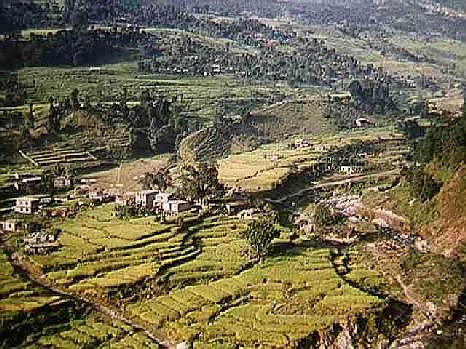
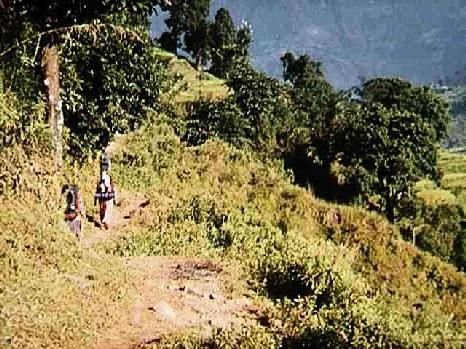
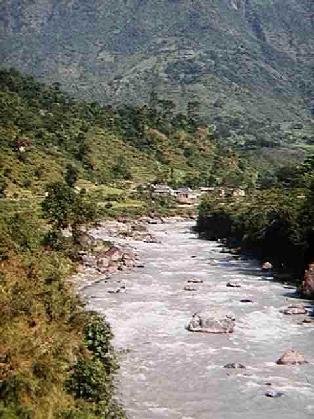
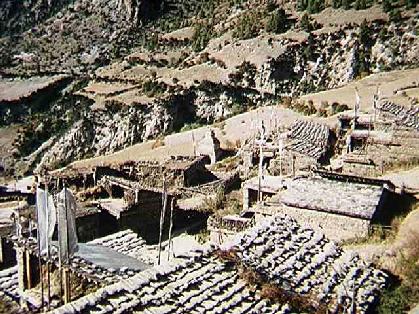
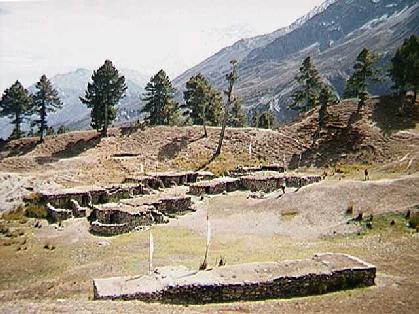
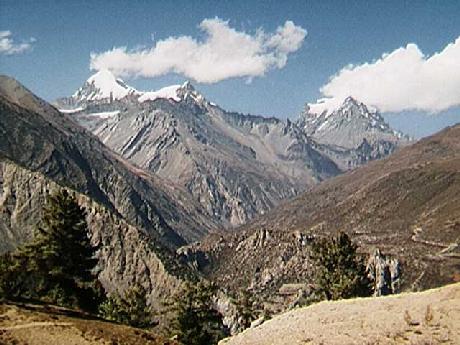
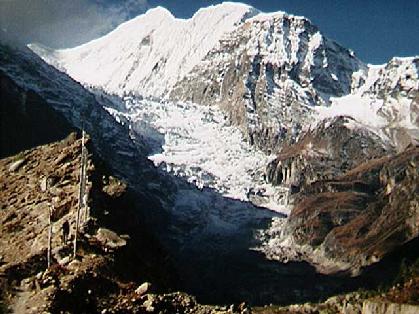
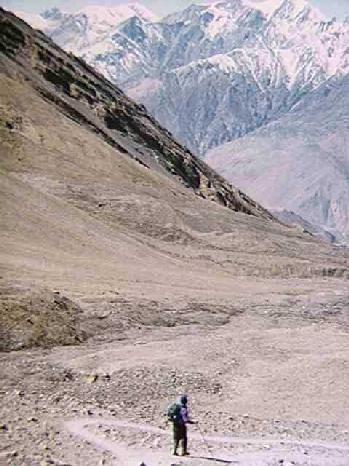
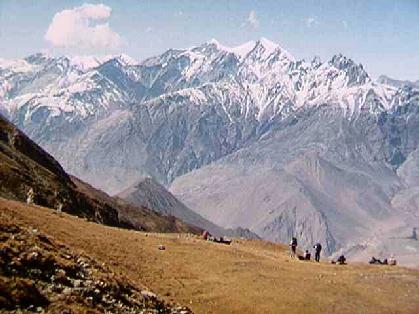
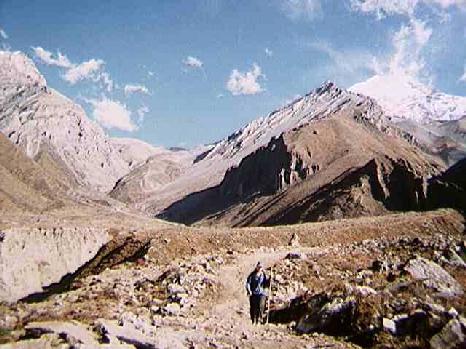
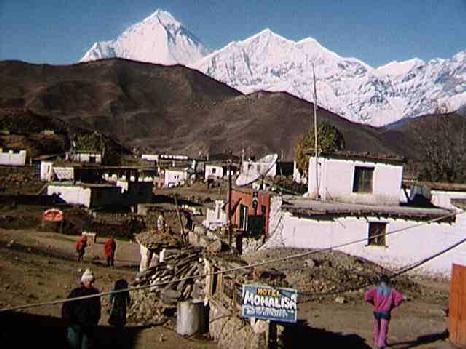
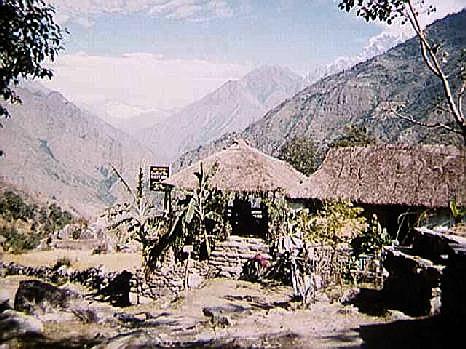
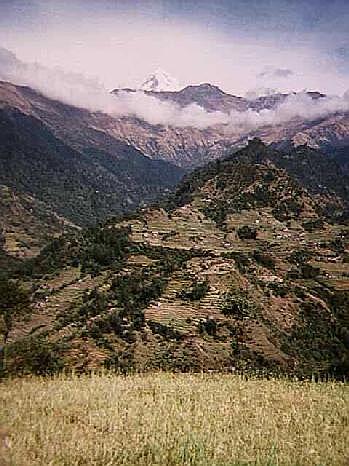
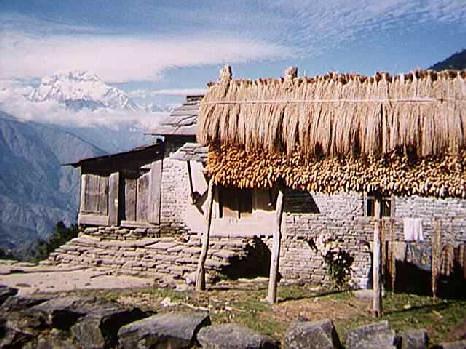
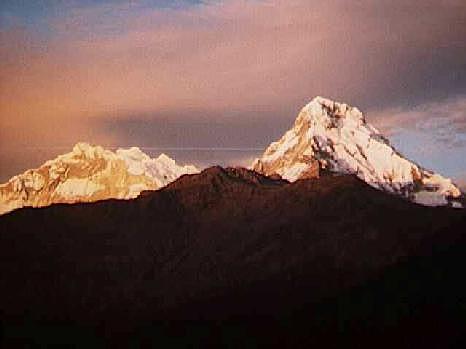
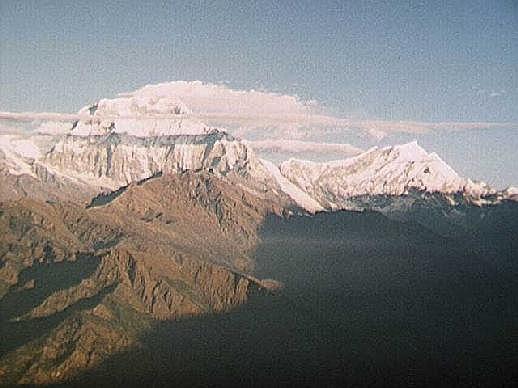
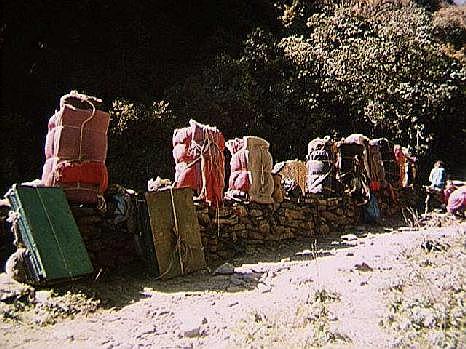
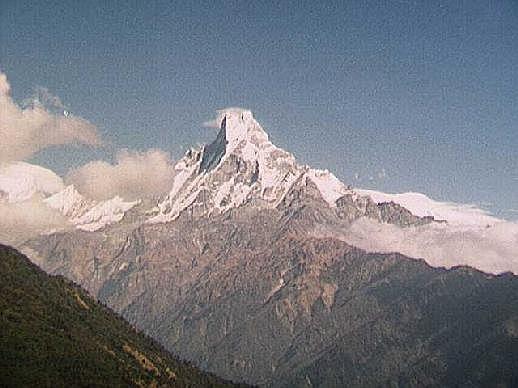
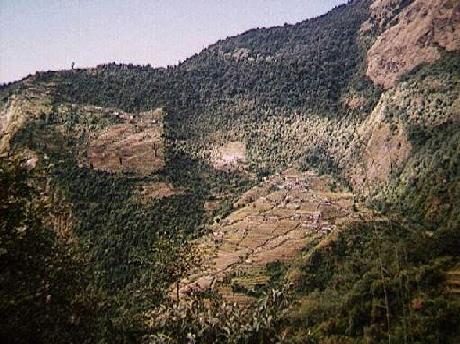
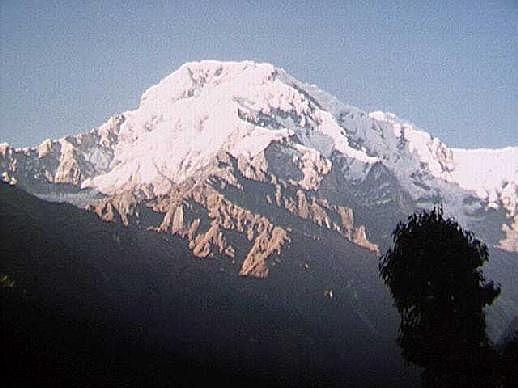
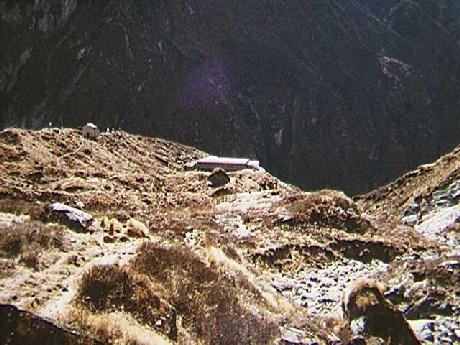
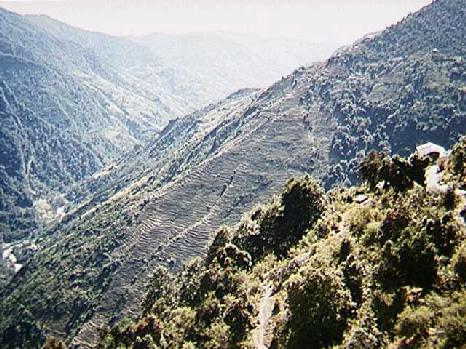
Cultural AdventureAt the end of the first day of trekking when we came over the top of the hill and our guide said that down below was our campsite and that the tents we could see (already pitched) would be where we would be sleeping, it was a total surprise to us. None of us had thought that somebody would be pitching tents for us or that we would have such elaborate and delicious meals.Hannah Messerli Under Icy peaks - Siklis14 Days: 10 Days Full Service Tented Trekking, Everest Flight; Optional Jungle SafariFrom only $1,499 per person, fully inclusive Way, way off the beaten track but convenient to good transportation, this is the perfect trek for people with limited time but high aspirations. This moderate ten-day trek goes generally northwest from a roadhead near Pokhara, to Siklis village high on the shoulder of Macchapuchhare Himal, up Rambrong Peak (13,600 feet), and ends at Besisahar, a boomtown set at a primitive roadhead. There are superb views of the great mountains and excellent opportunities to see a variety of villages and peoples largely untouched by the modern world. There will be few if any other westerners on this route. Much of the way you will trace along the boundary between cultivation and wilderness, with great mountains to one side and terraced hillside farms and villages spreading away to the other. In this world manufactured goods are in use but travelers are rare, and the people go about their lives as they have for time immemorial. See it with your own party of friends and family, at your convenience, and in high style, with us. Highlights Include:Experience the real Nepal - far, far from the crowds.10 days tented trek, including full camp, food, staff, & permits. The treasures of the Kathmandu Valley: Dazzling temples, crafts, and fine arts. Accommodations in good hotels, sightseeing, guides, and fees. All domestic transportation by air and ground, in Kathmandu and to and from Trek, and a spectacular mountain flight to Everest Unforgettable Memories  Itinerary
FacilitiesThe facilities on trek include an English-speaking Sherpa guide with years of experience, and two or three additional English-speaking Sherpa staff, an excellent cook and kitchen staff; and first class equipment including large two-person sleeping tents (designed for four), foam mattresses, dining tent with folding chairs and table, bathroom and bathing tents, gas lights, and a few extras. A crew of a dozen or more porters will carry the camp, supplies, and your gear. You need carry only a day pack with your water bottle, camera, and a sweater or jacket.Special Option for this ProgramSafari! 3 Days, from only $450 including airfareFly to The Chitwan National Park from Kathmandu on day 14 for three days all inclusive jungle safari at the Chitwan Jungle Lodge. Ride elephants, jeeps, and canoes to see the wildlife. Meals, Lodging, all activities included, along with trained naturalists guiding and assisting you full-time. A great nature adventure. Extend Your TripIndia: 5 Days from only $575Visit the Taj Mahal, ride camels in the desert, stay in a palace, and wander ancient bazaars. Tibet: 8 Days from only $900 Journey overland to Lhasa thru high Tibet. 3 days sightseeing in Lhasa, and fly back to Kathmandu. Both Programs include hotels, transportation, sightseeing with English-speaking guide, all permits and entrance fees. Program Summary14 Days: Kathmandu, Siklis Trek, Mountain Flight 4 days Kathmandu, 10 day trek, Everest flight, optional Safari |
Sunday, February 24, 2008
Cultural Adventure

Trek the Annapurna Sanctuary, Fly Everest

Trek the Annapurna Sanctuary, Fly Everest
The trek was really memorable, like the magical morning when we hiked through a steep, narrow canyon after a heavy snowfall during the night - rhododendrons in full bloom capped with snow, and the river winding its way through snowy cliffs lit by a bright sun.Robert Aumann
Friends in High Places guest
Enchantment amidst the Snows
18 Days: 13 Days Trekking, Everest FlightOptional 5 days White Water Rafting
From only $1,299 per person, fully inclusive
Trek-only from $799
Full Service Tented Trekking from $1,499
The best of the best.This trip starts with sightseeing in the ancient Kathmandu Valley, then wings you to Everest and the other great mountains for an hour of cruising the Top of the World. Every seat is a window seat on this flight, and the Captain makes two full passes, so every one gets a perfect view of the icy peaks.
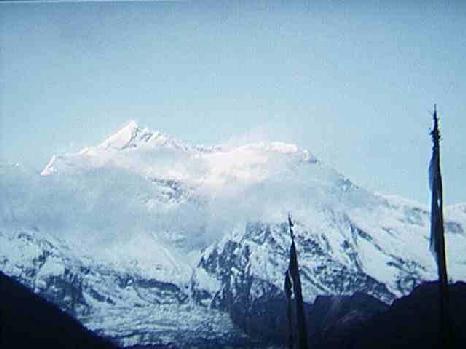
Then trek through the lush middle hills, full of farms and forests and inhabited by sturdy Gurung and Magar peoples. Your goal is the exquisite Annapurna Sanctuary, a gem-like bowl set in and completely surrounded by the peaks of the Annapurna Massif. You will visit both Machhapucchare and Annapurna Base Camps.
Take the optional five day white water rafting trip after your trek, instead of returning to Kathmandu. The Kali Gandaki river is large and strong, but the pace on this fully inclusive program is moderate with class 3+ and 4 rapids alternating with calm water for peaceful paddling. Snow capped peaks, farm terraces, and a derelict "Indiana Jones" palace decorate the riverside as you go.
Trip Highlights Include...
Mount Everest, up close and personal, plus a host of other spectacular mountains.13 days tented trek, including full camp, food, staff, & permits.
The treasures of the Kathmandu Valley: Dazzling temples, crafts, and fine arts.
Accommodations in good hotels, sightseeing, guides, and fees.
All domestic transportation by air and ground, in Kathmandu and to and from Trek.
Unforgettable Memories
 One of our previous guests has written up her experiences on this route and the Annapurna Circuit, which she and her friend did as one trek. You might enjoy her journal.
Itinerary
- Day 1
- Arrive Kathmandu. Airport pickup, hotel check-in.
- Day 2
- Morning sightseeing, afternoon free. Evening trek briefing.
- Day 3
- Everest flight early morning. Afternoon free to relax, shop, orÉ? Our staff will answer your equipment questions, and assist with hiring or purchasing any- thing you need.
- Day 4
- Fly to Pokhara, Nepal's "second city". Trek to the village of Dhampus, about 2 hours from town..
- Day 5
- Head north along the Modi Khola river, through forest and farms. Stay in Landrung, above the river.
- Day 6
- Farther north today, and gaining altitude, to the town of Chomrong.
- Day 7
- Cross 10,000 feet today, and camp at Bamboo.
- Day 8
- Climb higher today, still close to the river. Camp at the Himalayan campsite.
- Day 9
- Machhapucchare Base Camp today. Now you are totally enclosed in the great Himalaya.
- Day 10
- Trek two hours across the Sanctuary to Annapurna Base Camp today, and then explore the area.
- Day 11
- Descend past both base camps and below 13,000 feet. Camp near Bagar.

- Day 12
- Descend more today, and set camp near Doban.
- Day 13
- Return to Chomrong today.
- Day 14
- A shorter day to Ghandrung. Time to explore this large and prosperous town, home to many retired British Gurkha soldiers.
- Day 15
- South to Birethanti, a small, pretty town set beside a boulder-filled river.
- Day 16
- In the morning, walk out to the road, and drive back to Pokhara. Afternoon flight back to Kathmandu.
- Day 17
- In Kathmandu. Sightseeing, shopping, or what-have-you.
- Day 18
- Transfer to the airport and depart. Baggage and check-in assistance, of course!
In Kathmandu
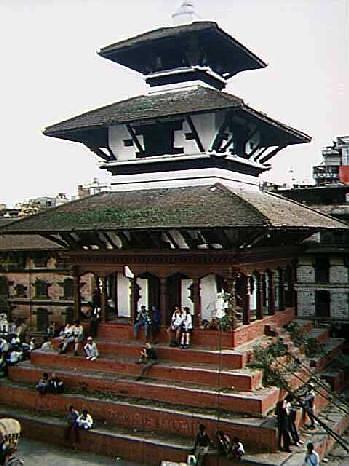
Two thousand years of culture overflow the spectacular Kathmandu Valley. On Day 2 you explore old Kathmandu, the temple-filled Palace Square and the hilltop temple of Swayambunath.On Day 17 you time-travel back to the middle ages at Bhaktapur - the city of devotees . Then the riverside temple of Pashupatinath and the 5th century stupa at Baudhanath, respectively the holiest spots in Nepal for Hindus and Buddhists.
And there's plenty of time to explore on your own, with our suggestions.
Extend Your Trip
Special Feature for this ProgramRafting! 5 Days, from only $350 For those who elect, there's five awesome days of rafting on the Kali Gandaki River. Rafters will stay behind in Pokhara on Day 16. Days 17 through 21 are spent on-river. Return to Kathmandu on Day 22 for sightseeing, and depart Nepal on day 23.
India: 5 Days from only $675
Visit the Taj Mahal, ride camels in the desert, stay in a palace, and wander ancient bazaars.
Tibet: 8 Days from only $900
Journey overland to Lhasa thru high Tibet. 3 days sightseeing in Lhasa, and fly back to Kathmandu.
Both Programs include hotels, transportation, sightseeing with English-speaking guide, all permits and entrance fees.
Program Summary
18 Days: Annapurna Sanctuary, Everest Flight 5 days Kathmandu, 13 day trek, Everest flight, optional raftingThe Everest and Elephant Expedition
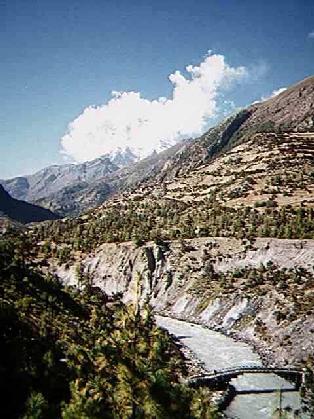
 The Everest and Elephant ExpeditionI peeked out from my tent one morning to see a beautiful eagle soaring in the sky. I felt so good that it was a few moments before I realized that I was looking down at the bird...Stanley P. Gold Find yourself in the wilderness of NepalFrom only $1,499 per person fully inclusive Trek-only from $1,199 Full Service Tented trekking from only $1,899 Everest - Home to Sherpas, Yetis, reincarnate Lamas, Gods, Goddesses, and a forgotten way of life. Your trip starts with two days in the Kathmandu Valley, seeing Nepal's exquisite cultural heritage, getting over jet lag, and preparing for the trek. You fly to Lukla and trek North to Everest, through the heart of the Sherpa homeland. Rest and altitude acclimatization days are scheduled and you ascend slowly to a high point above 18,000 feet for unparalleled views of the great mountains. Visit Namche Bazaar on market day with your new Nepalese friends and have an interview with a "rinpoche" (reincarnate Lama) at Thayangboche Monastery. Rushing water, forests, glaciers, religious images, and yak trains are all around you as you go. Then fly to the lowland jungle on Nepal's southern border with India. Stay in a jungle camp in the national park and ride elephants in search of big game. Professional guides and naturalists explain and interpret. Walk through a nearby local village and talk with the Tharu people as they go about their ancient way of life And finally return home, full of the accomplishment and with memories to last a lifetime. Trip Highlights Include...Mount Everest, up close and personal, plus a host of other spectacular mountains.Beautiful rivers, lovely ancient towns, and the smiling Sherpa people living in their traditional way. The dazzling treasures of the Kathmandu valley - Temples and palaces, beautiful arts and crafts, God-Kings and a living Goddess, and two thousand years of high culture. Accommodations in good tourist hotels in Kathmandu, luxury tents on Trek, and a comfortable lodge on Safari. Wildlife safari by elephant and aboard dugout canoes to spot rhinos, deer, monkeys, and maybe even a tiger. All transportation, permits, fees & taxes. Unforgettable Memories  One of our previous guests has written up her experiences on this route and an Annapurna trek. You might enjoy her journal. One of our previous guests has written up her experiences on this route and an Annapurna trek. You might enjoy her journal.Itinerary

A Day on Trek...Rap, rap, rap comes the knock on your tent pole, and the flap is thrust aside. "Bed tea - Good Morning," says the smiling Sherpa as he sets down your steaming cup. A few minutes later a basin of hot water comes: Wash up in the bath tent.A hearty breakfast of many choices later, you're off to walk for about three hours through forests and farming villages. A hot meal and a break of an hour or more await you at your lunch stop, chosen for pleasant surroundings. Trek in the afternoon for two or three hours to your camp. Explore the area or relax until dinner is served at the dining tent, complete with table, chairs, and excellent food. In the evening read or chat among yourselves or with your crew. You can probably get them to sing and show you their traditional dances. "Penny ante" card games are popular in Nepal, and the crew would love to teach you their 3 card poker-like game, among others. Finally, retire to your large two-person tent and foam mattress for a well deserved night's rest. Extend Your TripIndia: 5 Days from only $575Visit the Taj Mahal, ride camels in the desert, stay in a palace, and wander ancient bazaars. Tibet: 8 Days from only $900 Journey overland to Lhasa thru high Tibet. 3 days sightseeing in Lhasa, and fly back to Kathmandu. Both Programs include hotels, transportation, sightseeing with English-speaking guide, all permits and entrance fees. Program Summary22 Days: Kathmandu, Everest, Jungle Safari 5 days Kathmandu, 14 day trek, 3 days Chitwan National Park |
Trekking

There was once a monk who lived high in the mountains. He was poor and had no possessions. He lived on berries and leaves and the sight of the mountains. His being was full of their beauty and through them he acquired wisdom.
One day, a thief came upon the monk and seeing he was poor, apologized for the intrusion and was about to leave when the monk stopped him.
"I have these clothes and you cannot go away empty handed," said the monk.
And he gave the thief his clothes.
Alone, the monk sat sipping water from an earthen cup when suddenly he saw the mountains and the sky and the beauty of his surroundings reflected in the water he was sipping.
"Poor thief," said the monk to himself. "I could not give him this."
Trekking
The greatest single attraction of Nepal is her beautiful mountains, and walking among them is a wonderful way to experience their majesty.Friends in High Places - An Individualized Outfitter
What Individualized Means
Friends in High Places designs and operates individualized programs for small groups. This means that we talk with you, sometimes extensively, and make a proposal to meet your interests. We will take your party where ever you want to go, on what ever dates are most convenient for you. All first quality and inexpensive.That said, some routes just aren't practical for solo trekking , and some solo travelers prefer a small group. Check the sample programs below for pre-planned group trips, and feel free to inquire. We are always willing to match up small parties.
We are also happy to make hotel reservations, arrange transportation, and fit a jungle safari or whitewater rafting expedition into your visit. If you would like to combine a stop in India or Tibet with Nepal, we can do that too.
We enjoy fitting both the trek and the rest of your experience in the fabulous Kingdom of Nepal to your interests. Let us know about your hobbies and work. We can probably find some interesting tie-ins in Kathmandu or on trek.
Itineraries are always flexible. After all, it's your trek! With the fixed departure groups, you pretty much have to do exactly what's planned, at the group pace. With an individualized trek and an experienced guide, your itinerary is flexible. You can go faster and see more, or stop in a particularly pleasant place for an extra day.
Safety always comes first on trek. Although your guide is going to interpret and be your window onto this amazing place, his first duty is to keep you healthy and safe and on the right trail. Our guides are ethnic Sherpas, and their heritage is one of great service. They also very friendly people, so you will probably come away with a lifelong friend as well.
Old is gold

Annapurna Circuit, Nepal - Oct 1995
By David Metsky
In October/November 1995 I hiked the Annapurna Circuit and Sanctuary in Nepal. The circuit is a 200 mile journey around the Annapurna Himal, up the Marsyangdi River valley to Thorong La, a 17,700' pass, and down to the Khali Gandaki River valley. I also went up to the Annapurna Sanctuary, a high bowl in the middle of the Annapurna Himal, surrounded by 7000 and 8000 meter peaks on all sides. Along the way we traveled through dense bamboo forests, arid mountain villages, high desolate alpine terrain, and saw fields, river valleys, temples, towns, and met wonderful travelers and locals.
Kathmandu 10/5-10/7
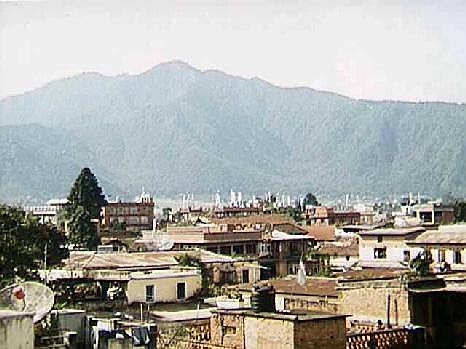
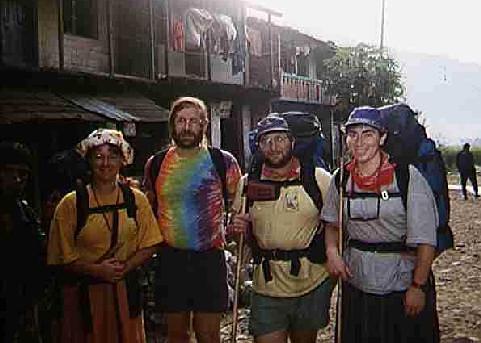
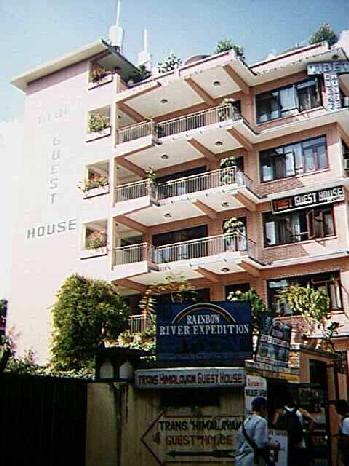
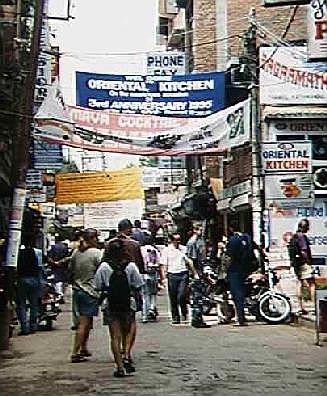
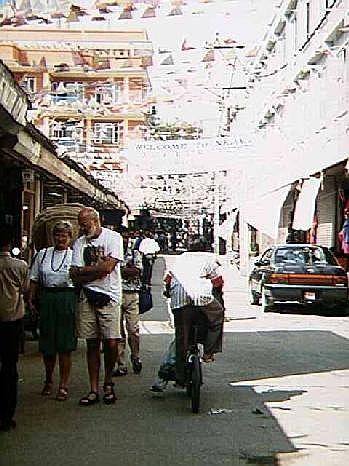
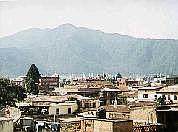 We arrived in Kathmandu on 10/5/95 after spending two unplanned days in Bangkok due to airline problems. Put plenty of extra time in your schedule to be safe. Our group was Catherine, Peter, me, and Sally. From the airport, the van from the Tibet Guest House picked us up and took us to Thamel, the tourist quarter of Kathmandu. We got our trekking permits first thing in the morning the next day (Friday) because everything was closing at noon for a two day holiday. Then we spent some time shopping for clothes and other stuff. The streets are full of shops that sell clothes, t-shirts, jewelry, books, food, and any other thing you can imagine. There are lots of street hawkers selling Gurka knives, Tiger Balm, and drugs. The streets are full of bicycles, rickshaws, cars, and vans. It's exciting.
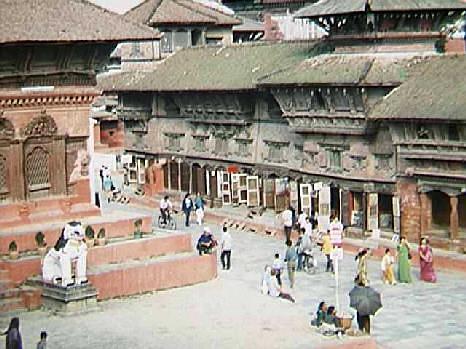
The city was somewhat overwhelming for me at first. I've never been to southeast Asia before, and the sights, sounds, and smells can be bewildering. But I always felt safe in Thamel. There are westerners everywhere you look, most of the signs are in English, and people are friendly and courteous, for the most part. Some salespeople are pushy, but that's part of the charm. We took a walk to Durbar Square, a collection of temples and shrines. We wandered a bit through non-tourist areas and had a great time.
Pokhara 10/7-10/9
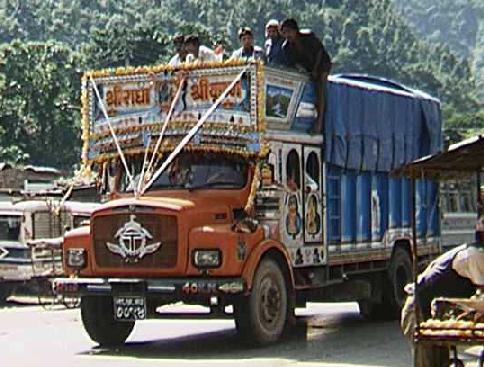
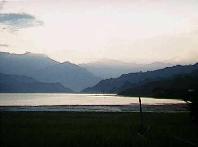 After two days in Kathmandu we headed to Pokhara, the main town in the Annapurna region. The road is narrow, twisty, and poorly paved making sitting in the back seats for six hours a very uncomfortable affair. Make your bus reservations early. Nearly all of the vehicles are TATA buses and trucks, indestructible Indian vehicles that seem identical in their repair schedule and capacity. We stopped for lunch along the way in small town.
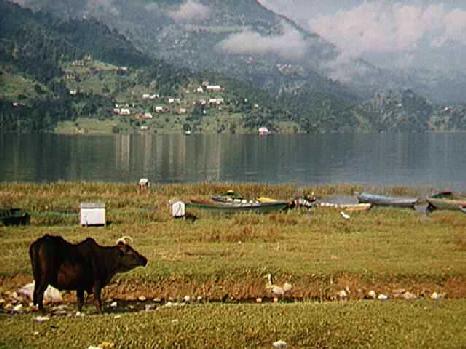
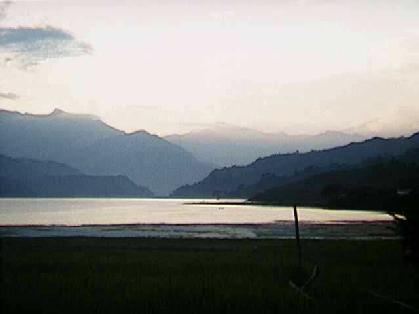
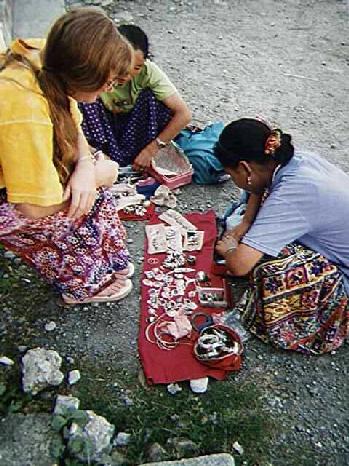
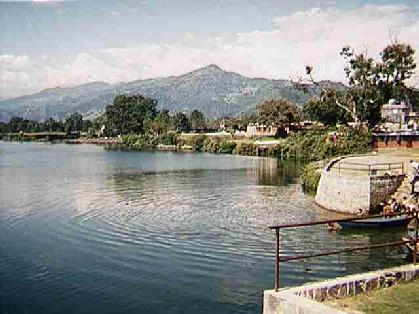
We arrived in Pokhara in the late afternoon and arranged a taxi to Lakeside where we found Peter's porter, Dharma, from a trip two years ago. The rest of us were going without porters. Lake Phewa sits on the edge of town, with some views of real big mountains just poking out from behind the hills. The streets of Pokhara have Tibetan women selling jewelry in efficient teams of two. There are many of the same kind of shops as in Kathmandu, but with more trekking goods stores and lots more restaurants.
We needed to spend an extra day in Pokhara before Dharma could leave so we did more shopping and walking around. I walked over to Damside which had some nicer views of Machapuchre (Fish-tail) mountain. On 10/9/95 we got back on a bus to take us to Dumre, where we caught a bus to Besisahar, the starting point of the trek. The bus trip from Dumre (1440') to Besisahar(2700') was just amazing, 150 people on a 40 passenger bus, a road that was no better than a 4-wheel drive path, and half of us had to get out and walk so the bus could make it up the hills. But it was a fun 5 hours. We grabbed a room in a hotel and crashed.
On the Trail: Besisahar to Bahundanda 10/10
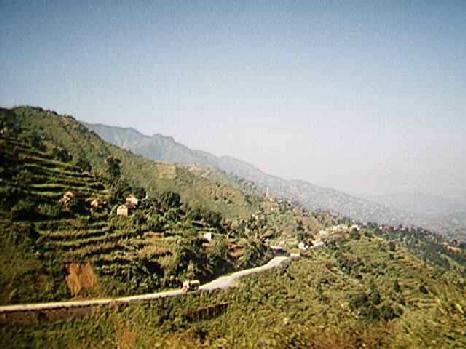
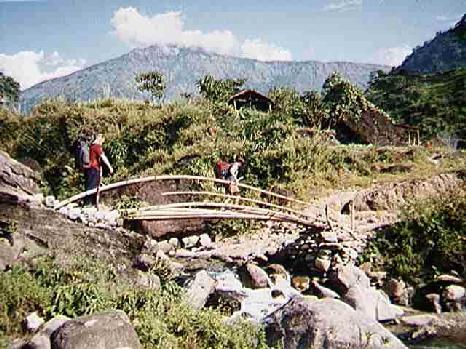
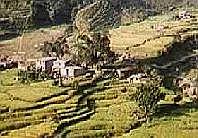 Our first day of hiking (10/10/95) was my 32nd birthday. This town was the end of the road and we didn't see motorized vehicles for the next three weeks. We got some nice views of nearby valleys, waterfalls , and a good look back at Besisahar and the terraced rice fields. The trail wound through rice paddies and thick forest, occasionally crossing small and large bamboo bridges.
 The trail follows the Marsyangdi Khola for the first half of the circuit. At the next big town, Bhulbhule the trail crosses the river for the first time on a large suspension bridge. It was quite hot and humid, and Catherine and Sally were feeling poorly. They decided to hire a porter, Doot, and let him take half of each of their loads. I ended up being the only one in our group who hiked with a full pack, but I had the most hiking experience of the group.
The second half of the day was easier until the final grunt climb to Bahundanda(4300') that nearly killed us all. We arrived late, and found some beds in one of the few hotels with any left. A cool shower and a nice meal with trekkers from all over made a fine end to the first day on the trail.
Day 2: Bahundanda to Chamje 10/11
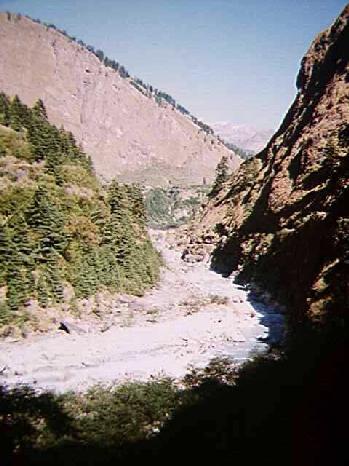
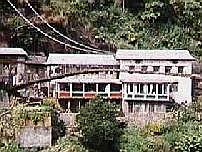 Now we began to get into the rhythm of trekking. Waking up each morning around 7:00, having a quick breakfast of Tibetan bread and tea, then heading out. I usually left earlier than the rest of my group, getting some good hiking done in the cooler morning and taking a bit of rest around 10:30 for them to catch up. This day started with a 600' descent before beginning the days climb. Along the way I observed some great trail construction, and places where the trail ran right across rock slides. A huge amount of work goes into keeping the trail up.
 We crossed back over the Marsyangdi and continued through thick forest in a deep valley until reaching Chamje(4560'), a small collection of hotels. We had a hot shower (a bucket of hot water and a cup), a good dinner, and crashed early.
Day 3: Chamje to Bagarchap 10/12
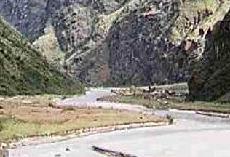 Again, I left early, but my ankle was bothering me a bit, so I walked slowly and the rest of the group soon caught up. We were climbing steadily and soon came to Tal(5460'), which is Nepali for 'lake'. There was a natural dam on the river that formed a small lake with an actual beach, and a nice waterfall on the other end of town. We stopped for an early lunch and I soaked my ankle in the stream, which made it feel much better.
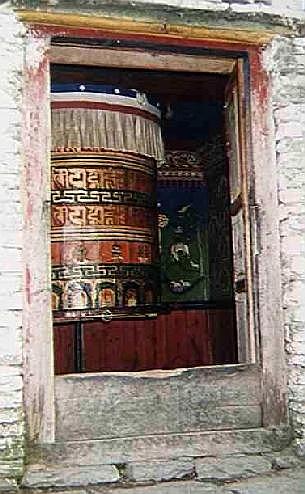
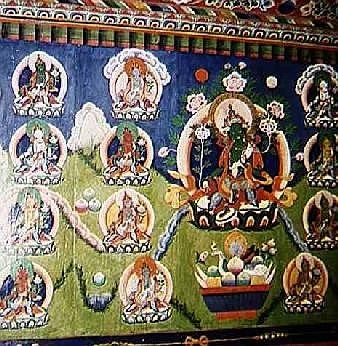
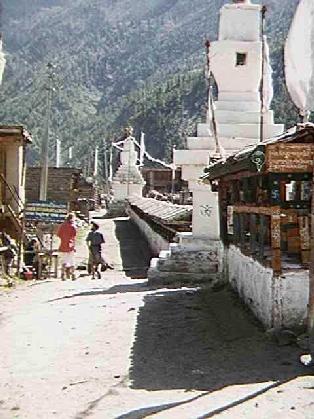
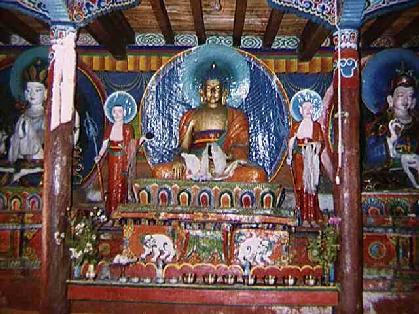
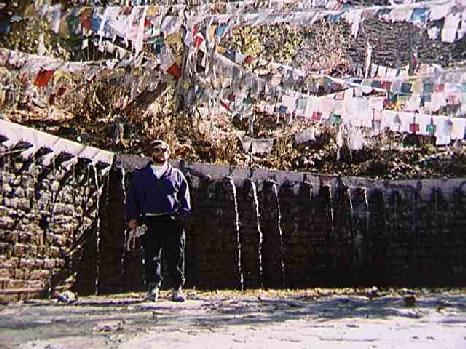
 We crossed the river again on a small bridge and climbed to Bagarchap(6900'). The people here were Tibetan, and the town had a huge 4 foot diameter prayer wheel in a gompa with beautiful religious paintings on the walls. There also was a large prayer wheel wall that you spin as you walk past. You always walk past them on the left, so you spin them with your right hand. Never use your left hand.
Day 4: Bagarchap to Chame 10/13
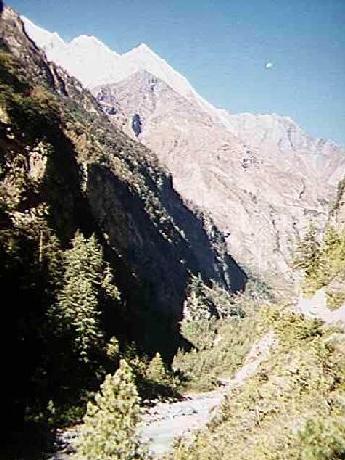
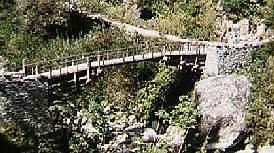 After Bagarchap, we were climbing much higher and into much drier terrain. The trail was headed into the rain shadow of some major peaks, and we were reaching higher altitudes.. The river was getting significantly smaller the higher we went. We also started getting some pretty nice views of major peaks.
 Chame(8580') was a pretty major town, with a bank, electricity, and most importantly, a hot spring. It was pretty small and quite crowded, but welcome none the less. From our hotel there was a great view of Lamjung Himal.
Day 5: Chame to Pisang 10/14
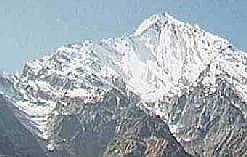 Early the next morning we got more nice views of Lamjung Himal and I headed out early with Doot. I had soaked my ankle the previous night and felt good, but figured I'd start early to make sure. My ankle felt fine, but it could have been the fantastic views of Annapurna II that were helping me along. We gathered together at a small village for a rest and spun the wonderful prayer wall before Sally and I headed out ahead.
 This next section of trail was the most spectacular we had seen so far. To start, a big section of the trail was blasted out of the rock. Then, as we turned the corner we saw the Granite Wave, a 2000' cliff of rock that dominated the area. As soon as we got over that we looked behind us and saw fantastic views of Lamjung Himal.
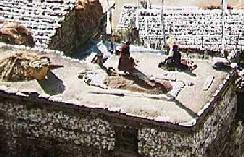 Soon the trail started climbing and then the terrain started to look like the Sierra. Sally and I stopped at this wonderful tea house to eat lunch and take a nap. Catherine, Peter, Doot, and Dharma showed up an hour later and we all pushed on to Pisang. Along the way we got our first glimpse of Pisang Peak.
It was still early so we decided to explore Pisang. We got a hotel in Lower Pisang(10,280') and then hiked up to Upper Pisang(10,600') to see the gompa, a temple at the very top of the town. Upper Pisang was very old, with windy little paths and houses one atop the other. The gompa had a stunning temple that we viewed. From the terrace in front there was an excellent view of Lower Pisang.
Day 6: Pisang to Manang 10/15
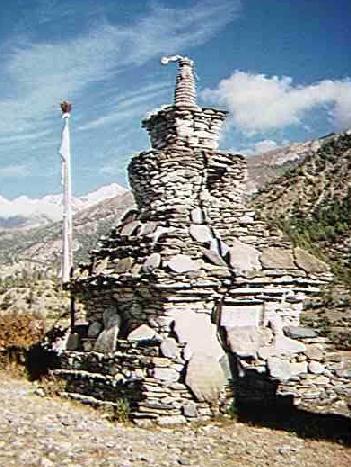
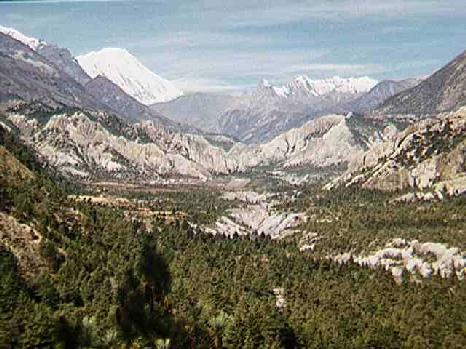
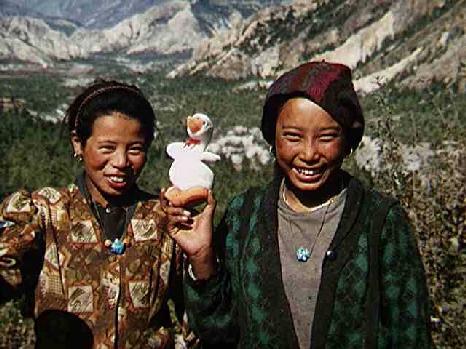
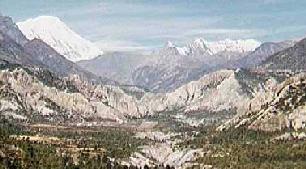 I woke up before dawn and hiked up to Upper Pisang to get some sunrise shots Annapurna II and of Pisang Peak. When I got back to the hotel, everyone else had decided to take a rest day in Pisang. I decided to head on to Manang and take my extra rest day there. There are two routes out of Pisang, and I chose the low route. Just out of town I passed a wonderful stupa, a large Tibetan prayer structure. The trail started off by climbing to a fantastic viewpoint(11,060') of the valley ahead. There were two teashops up top, and some of the girls running them discovered the mascot that I carried in my pack.
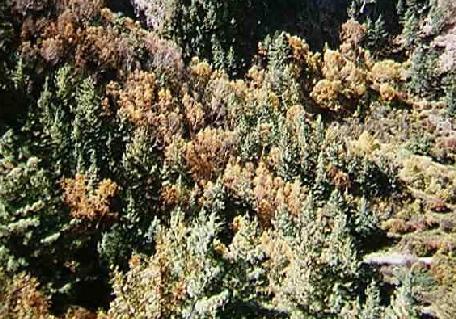
 The trail then dropped down through some fall foliage that reminded me of New England. I entered a wide flat valley that was much dryer than we'd passed through so far. Mule trains were more common here and we got incredible views back towards Pisang Peak. The next town was Ongre(11,060') which has an airport and the longest prayer wheel wall on the entire circuit, over 250. I spun every single one.
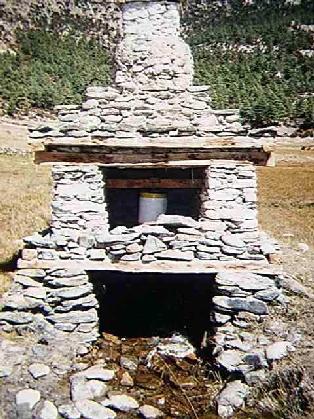
On the final leg of the day I passed a water powered prayer wheel; a fine example of ingenuity. Just before the end of the day, in Braga(11,425') is a 900 year old monastery of the Kargyupa sect of Tibetan Buddhism. I reached Manang(11,480'), found the Yak hotel, attended the Himalayan Rescue Association (HRA) talk on Acute Mountain Sickness (AMS) and settled in for the night with some Irish folks I'd met a few days earlier.
Days 7-9: Manang 10/16-10/18
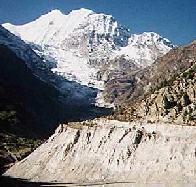 I had two days to relax and to day hike without a full pack. The first day I slept late and then started hiking up the side of Gangapurna. I met Fred and we hiked up some unmarked trails until reaching a beautiful viewpoint looking north. Then the trail climbed through the woods to a neat herder's camp. There we met some other hikers and had lunch, looking back across the Marsyangdi and Manang to the Chulu range. We also got some views north towards Thorong La, the high point of the circuit. We then hiked over to the glacier and down.
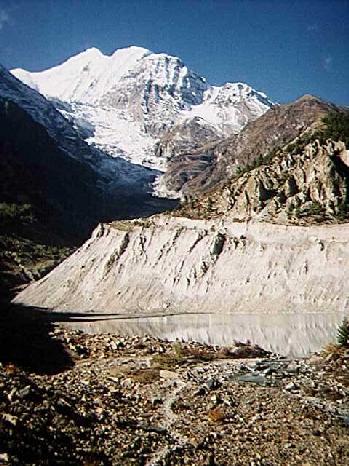
 My ankle (the other one this time) started hurting on the way down and by the time I reached the hotel I was in real pain. The rest of my group arrived and we settled in. The next day I just sat in the hotel and read to give my ankle a rest and by the end of the day it felt much better. The next morning we were supposed to continue on, but Catherine had a bad headache and was worried about AMS, so Sally and I took another day hike, this time up the left side of the glacier, above the bright blue lake at the base. We scrambled down some scree slopes to get back to town. So, I ended up spending three days in Manang instead of two.
Day 10: Manang to Ledtar 10/19
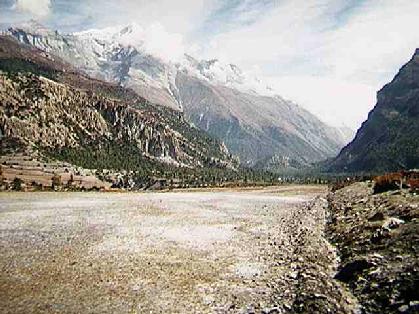
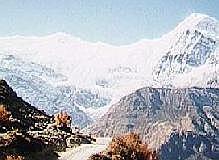 We tried again to leave Manang and this time we succeeded. From here on up, the trail follows the Jargeng Khola, a tributary of the Marsyangdi Khola. We quickly climbed through a few villages to Yak Kharka(13,020') for lunch. The altitude gave us excellent view back towards Glacier Dome. The terrain was a dry flat dry flat plain above the river valley, as we passed twisted mountains.
 We reached Ledtar(13,700'), which is a collection of three hotels, nothing else. Before dinner we spotted some Dal sheep on the hillside. Up here is was quite cold, and we could begin to feel the affects of sleeping at altitude.
Day 11: Ledtar to Thorong Phedi 10/20
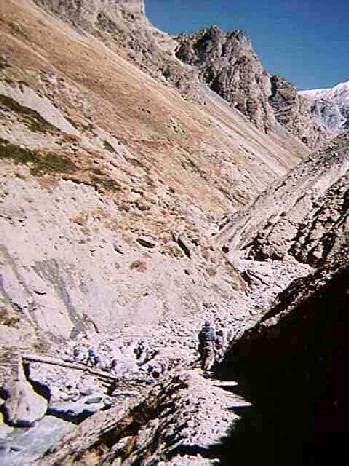
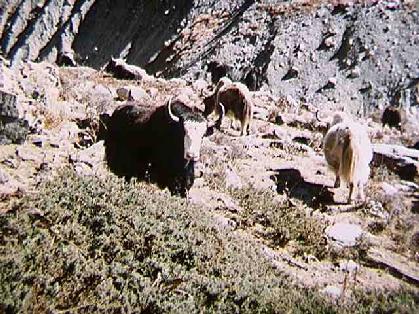
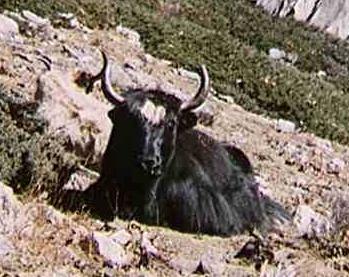
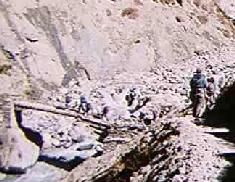 Again, Catherine woke up with a bad headache and wanted to stay another day to acclimatize. Sally and I decided to press on, with plans to meet up with Catherine and Peter on the other side of the pass. If they didn't go over, they would hike back the way we came. We started early because we wanted to get a nice room in Phedi. There's two hotels there, and most of the beds are in dormitory style rooms. The hike continued up the Jargeng Khola, before crossing it for the last time. We climbed to a tea house, past a herd of yaks, including some very large individuals.
 It was just a bit farther to Thorong Phedi(14,660'), just two hotels in a sea of scree. The 200' steep climb to the higher hotel was very slow, as the altitude was beginning to really sap our strength. We arrived around 11:00 and got the last double room. Then we ate lunch, rested, and played hacky sack with some folks staying nearby.
Day 12: Phedi to Muktinath, Over Thorong La 10/21
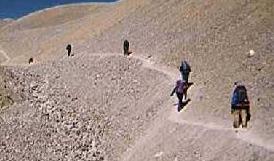 We woke up at 5:00, planning to leave in the dark, but waited until first light, about 5:45. It was quite cold, about 20 F when we started and didn't get much warmer all morning. You could see a long line of trekkers, hiking very slowly up the pass. The views were spectacular. We stopped to rest and have a snack at a tea house half way up. Then we continued the single file march on up. The views of scree and snow just got better, and we all were moving slowly enough to appreciate them.
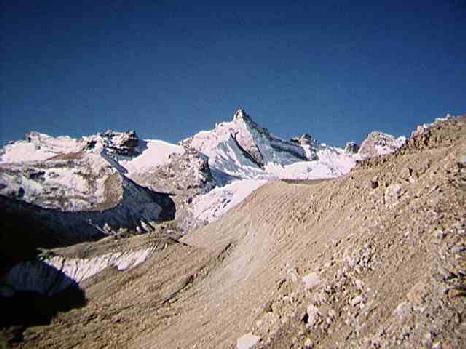
 As we approached the pass, we saw climbers on the peak to the south of the pass. Finally, around 10:30, we made it! Thorong La(17,700') is the transition from the Marsyangdi Khola to the Kali Gandaki, and into the Mustang district. We ate chocolate, took pictures and played hacky sack before starting the 5000' descent. Along the way we stopped at a beautiful hanging meadow for a snooze, then continued on down to Muktinath(12,460'). With one last look back at the pass, we ended our toughest day.
Day 13-14: Muktinath to Kagbeni 10/21-10/22
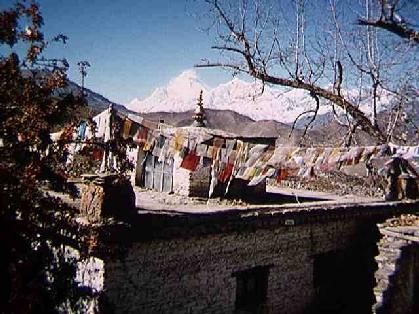
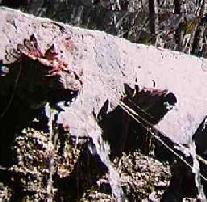 We slept late the next morning, but were woken up by a helicopter carrying very rich Indian tourists up to the temple. Our trip for the day was pretty short, and I wanted to spend some time in the temple complex. The hike up from town provided some spectacular views of Dhaulagiri. The temples are located in a sacred grove of trees.
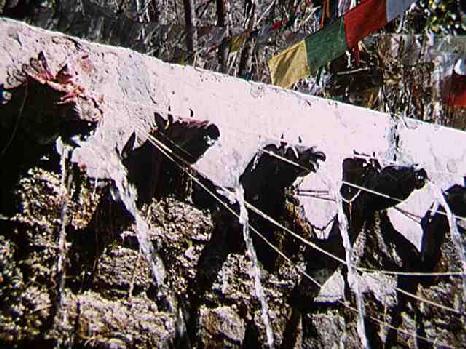
 There's a set of 108 fountains with the spouts carved in the shape of boar's heads. Pilgrims wash in each one to gain salvation after death. The fountains surround a temple full of bells that only Hindus and Buddhists can enter. The most important temple in the complex houses the place where fire (natural gas) burns on water (spring) where they come out of the ground together.
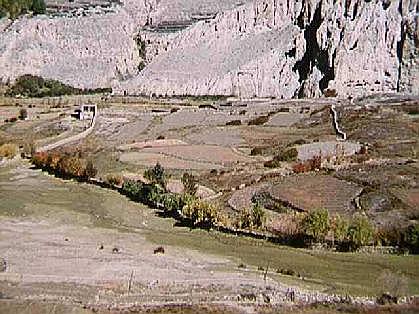
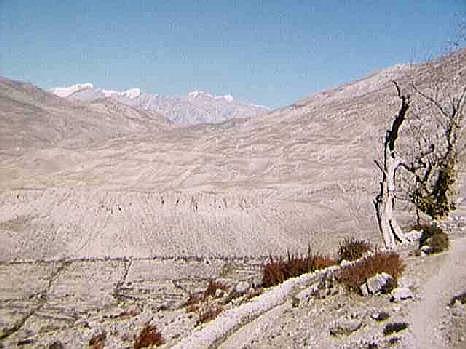
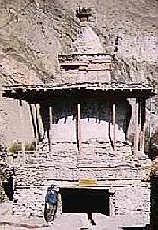 Sally and I headed down the valley which was dry and desolate. As we rounded a bend we had our last view of Thorong La. We passed though some farming areas where the locals stored hay and firewood on the roof. We then caught a view of Kagbeni(9200'), an ancient town that has been involved in the salt trade for thousands of years. It blocks the trade route coming down the Kali Gandaki from Upper Mustang.
If Catherine and Peter were going to catch up to us, we needed to spend a rest day, and Kagbeni was such a wonderful town that this was our choice. We stayed in the Dhaulagiri Hotel, a name we would see in every town on this side of the pass. The town was a jumble of narrow streets and tunnels, all piled on top of each other. There was a large monastery in the center of town. Near our hotel was a huge stupa with a tunnel running under it.
In the afternoon, the winds picked up and you had to go indoors. All the hotels had glassed sun rooms because you couldn't sit on a patio. That night we heard from some folks that Catherine and Peter had made it over the pass, but spent an extra day in Muktinath, throwing our schedule off. We decided to leave them some notes in Kagbeni and push on to the next town where we could spend another rest day if needed.
Days 15-16: Kagbeni to Marpha 10/23-10/24
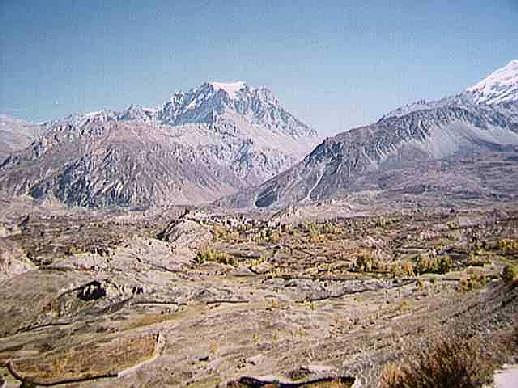
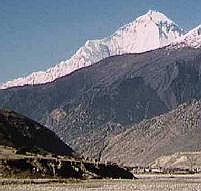 We wanted to get an early start so we could cover a lot of ground before the winds started, around noon. We hiked down the river bed and got some more great views of Dhaulagiri. We reached Jomsom(8900') which has some picturesque streets, very nice restaurants, and an airport. Many people fly into Jomsom and trek down river back to Pokhara.
 After lunch, we bundled up to protect from the wind and continued down river. We reached Marpha(8750'), perhaps the nicest trekking town on the whole circuit. We checked into our hotel and ate some more wonderful food. Now I was beginning to see why this part of the trip was known as the Apple Pie Circuit. There were fresh apples, apple brandy, and something resembling pizza.
To let Catherine and Peter catch up we took another rest day in Marpha. The town had a magnificent paved street running down the center with a water culvert underneath. The side streets were narrow but more open than Kagbeni. At one end of town was a beautiful mani wall. The rest of our group arrived that afternoon and we were together again.
Days 17-18: Marpha to Lete to Tatopani 10/25-10/26
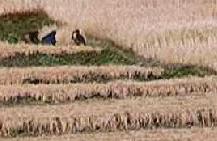 I had decided that I wanted to push on to the Annapurna Sanctuary, which would require 7 days of hard hiking. The rest of the group was going to take it easier, so I was on my own. We hiked together for the morning, past mountain views to the town of Tukche, just below Dhaulagiri. We continued on a bit farther and had and early lunch. Since I still had a long day, I bundled up against the wind and headed out on my own. There were clear views of the Nilgiri Range across the river bottom. As the trail fell, I started seeing more fields and signs of agriculture.
 I stopped in the town of Lete (8100') and found myself as the only guest in a large hotel. During dinner that night, two men came in. They had just summited Dhaulagiri and were on their way back home to Bulgaria. We had a nice time communicating as best we could about climbing. The next morning there were excellent view of Daulagiri and Tukche Peak.
I pressed on to Tatopani, my goal for the day. The Kali Gandaki cut deeper as the trail went south. After passing the town of Ghasa (6700'), the old trail was visible on the other side of the river, and it was obvious why it was abandoned. The valley broadened a bit, and I passed a beautiful waterfall.
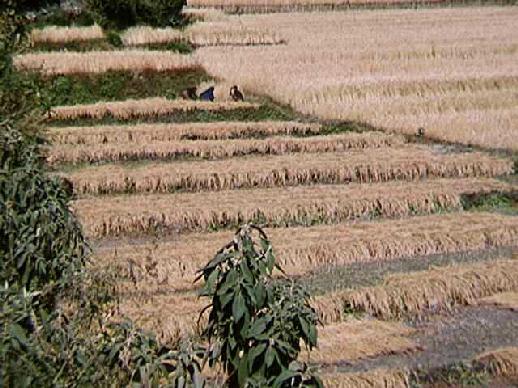
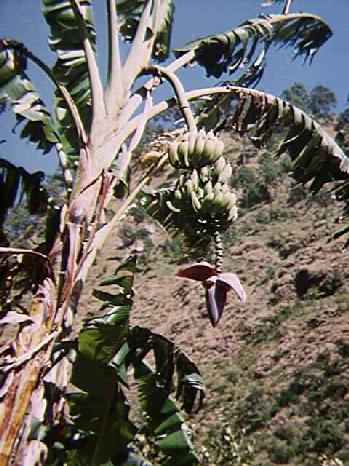
As I approached Tatopani (3900') the locals were harvesting rice along side the trail. There were banana trees reaching over the trail as I passed the hydro electric plant that supplied power for the region. The name Tatopani means hot water, and there are wonderful hot springs along the river. I fainted after going all day without much food, not drinking enough water, and then taking a dip in the hot springs. Don't try this at home!
Days 19-20: Ghorepani, Poon Hill, and Chomrong 10/27-10/28
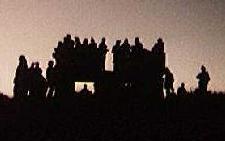 The climb to Ghorepani is around 5000', so I got a good early start and took it easy all day. After a few hours I had climbed out of the deep valley and got some good views back up river. It was hot, so I stopped often for water and snacks. There were people who rented horses for the climb. Both the trekkers and the horses looked miserable, and I ended up finished before them anyways. In the hilly terrain, one of the main crops was corn.
 I finally reached Ghorepani (9250') after a long hot day. I checked into a hotel in the center of town, but if I knew better I would have found a place farther up the hill where the views were better. That night we watched a beautiful sunset over Annapurna I and Annapurna South.
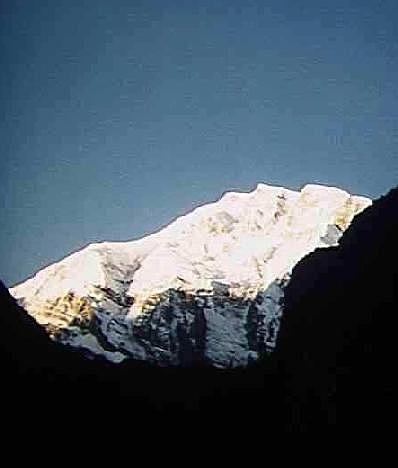
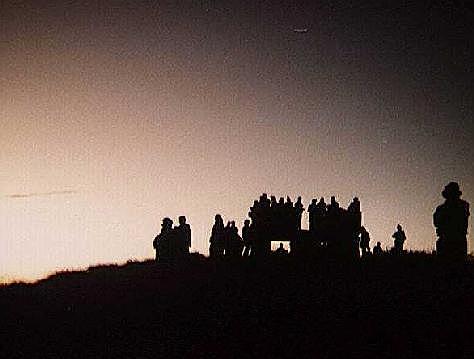
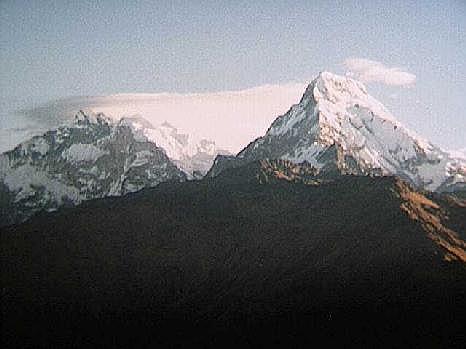
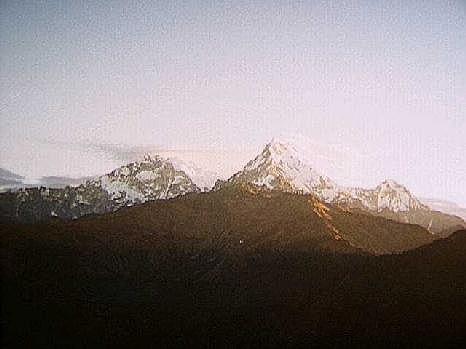
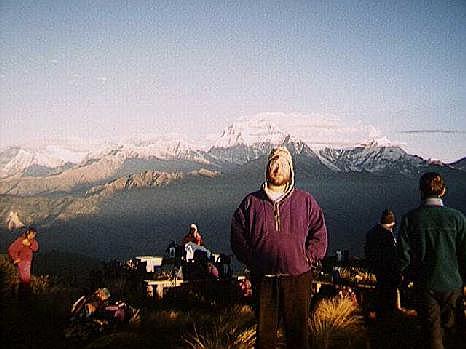
It is almost mandatory that you wake up before dawn and climb the 1000 feet to Poon Hill (10,478') so you can see an unobstructed sunrise. So, I woke up at 5:00AM and started up by headlamp. It took 30 minutes or so, and people had started gathering already. As the sun came up we first had a view of Annapurna South, and then the entire Annapurna Himal. I had some friends take a picture of me to remember to occasion. Then Dhaulagiri came fully into view. I highly recommend the experience.
So, it was back down to Ghorepani, eat breakfast, pack up, and start the longest day of the trip. I met up with two other Americans and we started out. We climbed a hill with good views back towards Poon Hill and then dropped down to Deurali (10,160), then climbed up and mostly down to Tadopani (8800'). Along the way we went through thick forests and rough hills. Because this area is more heavily travelled, we saw more guided, tent trekkers and their severely overburdened porters.
We stopped for lunch in Tadopani, with gorgeous views of Machapuchre. But we still had a long way to go, so we headed off, dropping down to a river crossing then up a big climb. Few trekkers go this route, so the trail was much less established. We crossed the side of a hill, pausing to observe the flowers and farms along the way. I finally arrived in Chomrong at around 4:00PM, exhausted but having reached my goal for the day. This was the hardest day of the entire trip, and it meant I would be able to make it to the Sanctuary and out on time. I watched sunset over Annapurna South as I collapsed in my bed.
Days 21-23: The Sanctuary 10/30-11/1
 The next day started with a big drop down to the bottom of Chomrong and a big climb up the other side. The valley was steep walled, with some specatular waterfalls cutting through the sheer rock faces. There are a few lodges along the way, but several have been relocated to cut down on the damage to ecosystem. I hooked up with a Swedish woman, Annelie, as we left Chomrong and we hiked together for the next few days.
 We spent the night in Himalya, a collection of two guest houses in the middle of nowhere. The next day was a little cloudy, but we had occasional good views up and down the valley. A little after noon we hit Machapuchre Base Camp, or MBC. We stopped for lunch and to get out of the cold. Then pushed on to Annapurna Base Camp, the heart of the santuary. We grabbed the last bunks in a triple room with a ex-pat Brit living in Spain. The crowd was festive, but it was cold and snowing, so we spent most of the afternoon in the main room with a heater cranking under the table and lots of tea.
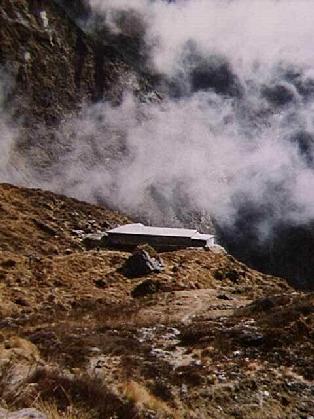
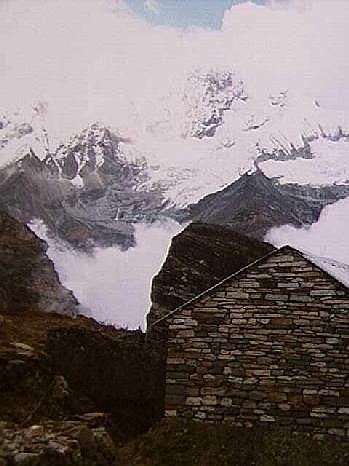
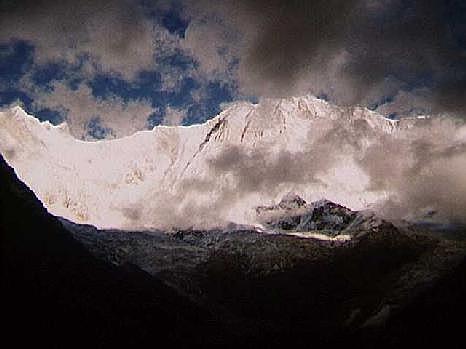
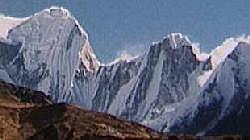 ABC is a collection of stone huts surrounded by mountains and glaciers at around 14,600'. The main peaks right behind ABC are Annapurna South, Annapurna I, and Hinchulli, but you can also see Machapuchre, Tent Peak, and Annapurna III. We spend a raucus Holloween in the dining room, with Marcel playing cards with the porters for money. Too bad he didn't understand the game he was playing. Needless to say, he lost.
The next morning everyone woke up for sunrise, but it wasn't that special, covered with clouds. I got a photo of myself and one of my mascot before leaving. We all hiked a short ways above ABC to get some perspective. Then we headed down as the weather cleared. We saw the high, rocky valley that we'd climbed the day before but couldn't see. We didn't stop at mbc on the way down, but pushed on, back into bamboo forests.
We stopped in Bamboo, the first town inside the santuary. It was nearly a 5000' drop, the same as coming over the pass. Everyone was beat, and no one was sure where we were going the next day. The sanctuary was spectacular, and the weather was clearing again, but everyone felt that we were on our way out, regardless of speed.
Days 24-25: Out to Pokhara 11/2-11/3
 We woke up early and Annelie decided to take it slower. We hiked out to the Santuary checkpoint and then split up. We got some real nice view back to Machupuchre as we bid the Sanctuary goodbye. Ahead of me was the drop and climb to Chomrong, up the most amazing stone steps, climbing 1500' straight up. By the time I reached the top of the hill I was beat. I decided to head out along the river, via a trail that wasn't on any of the maps. Fortunately I ran into two trekkers headed the same way and we joined forces.
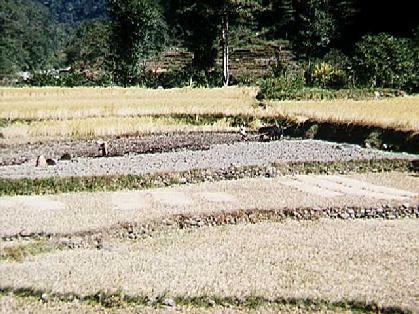
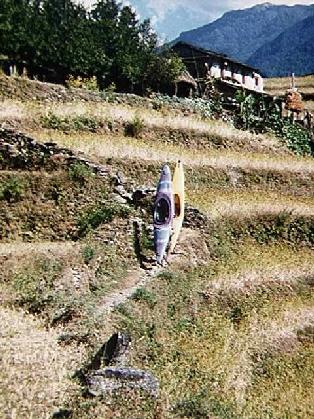
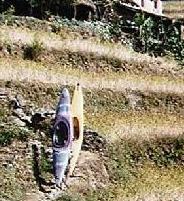
 First we dropped to the river and the rest of the trip was out along it. The trail was there, but not very heavily used. It brought us to a single lodge in the middle of nowhere, still several hours from the road so we crashed there. The town was called Kyumi and it looks like it was used mostly by big tenting groups. The next days hike out was gentle and relaxing, passing through terraced fields and rice paddies. We did see some porters hauling kayaks for some folks who were going to run the Mondi Khola. We hit the road in Berithanti and caught a taxi back to Pokhara and I was back in the hotel by 2:00. It was a big culture shock, reaching civilization again, and then realizing that Pokhara was now civilization.
The rest of my group arrived later that day. They had made it to all the places they wanted to go, but it was cloudy the day they were on Poon Hill so no one when up. It was a fantastic trip, I'd recommend it to anyone.
sample program
Sample Programs
 The trip descriptions here are programs which are consistently popular. There are many other routes, and lots of ways to combine your trek with rafting, a jungle safari, mountain flight or balloon ride, and a night or two in a mountain or river lodge or in Pokhara. The sightseeing in the Kathmandu Valley is great fun, on your own or with a professional guide.
Take these trip descriptions as a sample, and call us. Tell us what you want from your trip, and what you dream of. Let us put together a program for your party, to meet your interests, and on your dates.
Special Interest Emphasis
Every visitor to Nepal gets the thrill of seeing the great mountains, visits amazing palaces and monuments, and has the greatest pleasure of all - meeting the fabulous Nepali people. But that's not all. Nepal is such a rich place, full of history and art and wildlife, enriched by a wonderful blend of Hinduism and Buddhism, that there is something more, something special here for everyone.We enjoy creating programs for you to meet all your interests, so when you call or write to us, tell us a little about what you like and what you dream your trip to Nepal could be. Does walking through a 2,000 year-old market where foreigners rarely go sound like fun? How about visiting a reincarnate lama, or taking a meditation class? Are you interested in butterflies or birds? History or development? Medicine or the environment?
Visit us at a festival time if you can, for an especially unforgettable experience. The holiday calendar is on our internet Web site, and we'll mail a copy to anyone who doesn't have internet access. And if you're not a trekker, this richness of art, land and culture combined with the chance to drive or fly to mountain views makes Nepal a fascinating place to visit for a week or more.
Green Mansions

Green Mansions
The wildlife safaris of Nepal
The jungle safaris in Nepal are the natural gift of the Gangetic Plains that connect south Nepal and north India for 500 kilometers. This stretch was called the Char Koshe Jhari in Nepal, meaning the 'eight-mile forest stretch' that ws a formidable barrier until the 1950s. It was not only the dense foliage of the lowlands, but also the scourge of incurable malaria, that discouraged human penetration of the belt.Then the Americans sprayed the entire stretch with DDT in the 50s. The resultant eradication lured outsiders to the lowlands en masse, and one of the boons of this human encroachment has been the development of safari resorts and environmental and ecological protection of the length and breadth of the belt.
Today, some 15% of Nepal's area has been designated protected wildlife preserves. This fact is an international record for a small and poor country. Displaying considerable political will and determination to protect and preserve its fauna and flora, Nepal has set its own examples in sustainable development strategies, people - and - park projects, and other conservation programs. No wonder that the WWF (World Wildlife Fund for Nature) cited the Royal Chitwan National Park (RCNP) as its "success story, 1995" because of His Mjesty's Government of Nepal's coordination with the WWF in safeguarding and regenerating the rhino population of the park. What transpired was that protection of one species is also the preservation of others. Along with the unique one-horned rhino, another member of the park - the majestic Royal Bengal tiger - also benefitted, as did other resident inhabitants and migratory guests in the park.
The ideal months for safari in Nepal's Terai lowlands are from October to May. The destinations can be reached either by flying south, or by driving down on the countryside highways, and even by rafting down the Himalayan rapids.
Royal Chitwan National Park
. Chitwan means both 'heart of the jungle' and 'leopard forest' - and both indicate the lush and dense depth of the area. Easiest of the National Parks to reach, the park is one of the richest wildlife preserves in Asia, and the most famous in Nepal. The park lies in the Chitwan Valley between the Siwlik (Churia) and the Mahabharat ranges. It is drained by two rivers, the Narayani and the Rapti. The indigenous people are the Tharus who were immune from malaria.
The valley was officially designated a national park in 1973 and the Royal Nepal Army was deployed for its protection from poaching. In 1976, its area was enlarged to 1,040 square miles from its previous 402. RCNP is also notable for another fact that it was where concessionaires were first allowed to build and develop safari resorts and jungle lodges in Nepal.
There are numerous quality and budget resorts and lodges in Chitwan. Equally, there are many worthwhile places to visit. While a jungle walk with a trained naturalist can reveal can reveal the nearby vicinities, and elephant ride is the best way to penetrate the deep jungle to view rhino, the elusive tiger, leopard, sloth bear and gaur (wild cattle). The rivers contain crocodiles and mahseer fish, and an evening visit to the elephant stable is worth the while. Watching elephants being bathed and fed are other memorable experiences. Chitwan is a veritable preserve for diverse animal and bird life, rare reptiles, and ecology.

Royal Bardiya National Park
Royal Bardiya National Park is located in the remote and sparsely-populated far west Terai, and is the largest in Nepal. It is probably the most untouched preserve for adventurous travellers. It is another tiger territory, even better for that than Chitwan, and is also famous for game fishing which can yield the massive 50-kg plus masheer fish. Viewing of other fauna and flora is a chief pastime here, along with canoeing. This is also an ideal trailhead for trekking to the hills of west Nepal.The drive to Bardiya can take up to 12 hours from Kathmandu, and is a most memorable and scenic countryside drive as well as through the streches of the Terai. One can also fly to Nepalgunj, the nearest town, from Kathmandu and drive 90 minutes to the Park.

Royal Sukla Phanta Wildlife Reserve
Royal Sukla Phanta Wildlife Reserve is a small and remote area tucked away in the far south-west corner of Nepal. It is a gem of a wildlife sanctuary which is notable for the swamp deer called barasingha, meaning "twelve horns" in Nepali, which number an impressive 2,000.Koshi Tappu Wildlife Reserve
This lies in the eastern Terai on the floodplains of the Sapta (seven) Koshi river system. This reserve, a tapu (island), bounded by rivers on its east and west, and a barrage to its south, is a haven for 280 species of birds and 20 different sorts of ducks, rare swamp partridges and other waterfowls during winter. Koshi Tappu is also the only sanctuary in Nepal for wild buffalos.The Tharus
The lowland Terai of the safari parks is equally noteworthy for its endemic and ancient people: the Tharus. These colorful and malaria-immune "aborigines" or "tribals" of Nepal number some 600,000 today, and they speak unique dialects and practice various rites from animism to other traditions.Apart from the natural flora and fauna of the Terai national parks, the Tharus in themselves have become a subject of focal and scholastic interest for many visitors to Nepal, especially those interested in art and crafts
Subscribe to:
Posts (Atom)